Cleaner Offices Lead to Fewer Sick Days and Higher Productivity
Explore how maintaining a clean office reduces sick days, enhances air quality, boosts morale, and improves overall productivity.
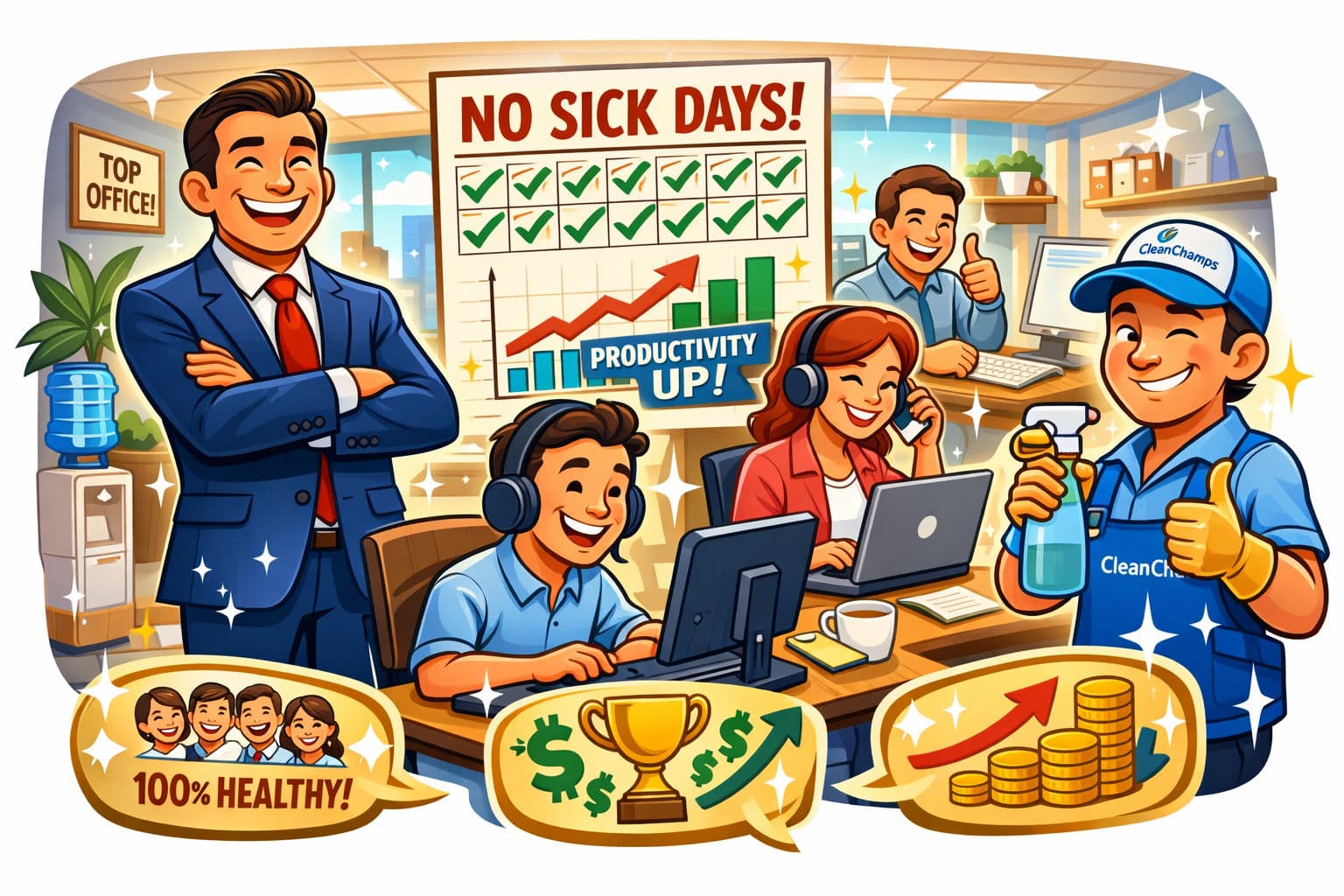
Most businesses still treat cleaning as a cosmetic function.
Wipe down the surfaces. Empty the trash. Vacuum the floors.
As long as it “looks clean,” it must be fine.
But office cleanliness isn’t about appearance.
It’s about operational performance.
Germs and bacteria live on desks, keyboards, phones, door handles, shared printers, breakroom appliances, and conference tables. Studies show that viruses can survive on hard surfaces for days. In high-traffic offices, those surfaces become transmission points.
The result?
Increased employee illness
Higher absenteeism
Lower productivity
Missed deadlines
Increased labor costs
Reduced morale
A clean office isn’t just a nice-to-have.
It’s a performance strategy.
Why Professional Office Cleaning Is Essential
1. Reduced Sick Days and Operational Disruption
Offices are natural hotspots for viruses and bacteria. High-touch surfaces are handled dozens—sometimes hundreds—of times per day.
Without targeted, consistent disinfecting protocols, illness spreads quickly.
When employees are sick:
Projects stall.
Teams operate short-staffed.
Managers absorb additional workload.
Momentum is lost.
Professional office cleaning reduces the transmission risk dramatically. Fewer sick days mean more consistent output, fewer disruptions, and a smoother-running operation.
Cleanliness protects your people—and your workflow.
2. Improved Indoor Air Quality
Dust, mold spores, and allergens accumulate gradually and often go unnoticed. Poor indoor air quality can cause:
Headaches
Fatigue
Coughing
Sinus irritation
Brain fog
Reduced concentration
Over time, this impacts performance even if employees aren’t technically “sick.”
Professional cleaning services address more than surfaces. Proper dust removal, vent cleaning, and HVAC attention significantly improve the air employees breathe every day.
Cleaner air equals clearer thinking.
3. Higher Employee Morale and Engagement
People perform better in environments that feel organized, maintained, and intentional.
A neglected office sends a subtle message:
“This space doesn’t matter.”
A clean office sends a different message:
“We care about this environment—and the people in it.”
Employees working in clean, structured spaces:
Experience less stress
Stay more focused
Take greater pride in their work
Feel more valued by leadership
Morale isn’t just emotional—it’s operational. And environment plays a major role.
4. Evidence-Based Cleaning and Accountability
One of the biggest failures in traditional janitorial models is inconsistency.
Cleaning gets done—but is it verified?
Are high-touch areas tracked?
Are outcomes measured?
CleanChamps emphasizes measurable cleaning outcomes through:
Digital checklists
Performance tracking
Documented service logs
Structured protocols
This transforms cleaning from a reactive task into a managed operational system.
Facility managers don’t have to “hope” it was done correctly.
They can verify it.
5. Long-Term ROI and Cost Control
Professional office cleaning is often viewed as an expense line item.
In reality, it’s a risk-management investment.
Reduced absenteeism improves labor efficiency.
Improved morale reduces turnover.
Higher productivity drives revenue.
Clean environments strengthen client perception.
When clients walk into a well-maintained office, they notice.
Clean spaces reinforce professionalism, structure, and attention to detail. That perception impacts trust—and trust impacts contracts.
The ROI is both internal and external.
How CleanChamps Makes a Difference
CleanChamps partners with businesses to create safer, healthier, and higher-performing work environments.
Our approach includes:
Targeted disinfection of high-touch areas
Structured cleaning schedules based on facility usage
Air-quality-conscious dust control practices
Digital accountability systems
Consistent quality assurance reviews
We don’t just clean offices.
We support operational stability.
Businesses that prioritize cleanliness aren’t just reducing germs—they’re protecting productivity, culture, and long-term growth.
Practical Office Hygiene Best Practices
Even with professional cleaning in place, businesses can strengthen results by:
Scheduling high-touch surface cleaning daily
Disinfecting shared equipment (printers, coffee machines, microwaves)
Cleaning HVAC vents and replacing filters consistently
Using checklists to maintain cleaning accountability
Encouraging handwashing and personal hygiene awareness
When leadership prioritizes hygiene, employees follow.
Final Thought
In today’s workplace environment, cleanliness is no longer optional.
It directly influences:
Employee health
Productivity
Morale
Client perception
Operational performance
Companies that invest in professional office cleaning position themselves for fewer disruptions, stronger teams, and long-term efficiency.
Clean offices don’t just look better.
They perform better.